How AI Impacts the Retail Industry in Supermarkets and Enhances Customer Experience
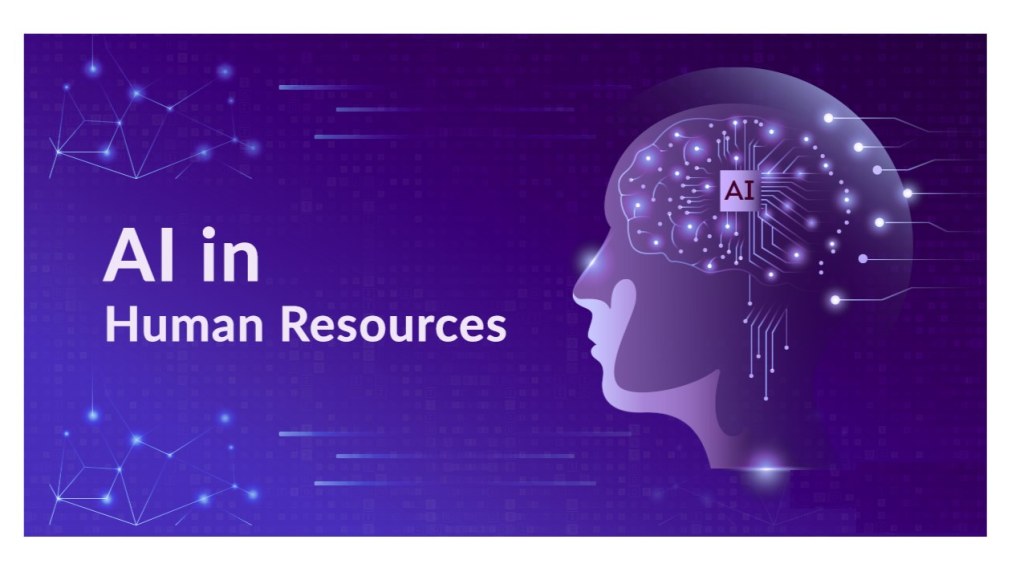
AI can assist human resources departments by automating and speeding up tasks that require collecting, analysing, or processing information. This can include employee records data management and analysis, payroll, recruitment, benefits administration, employee onboarding, and more. (Investopedia, 2026)
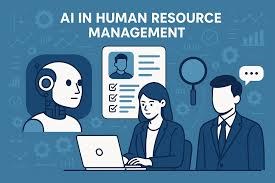
AI is now embedded across all these stages. According Tambe et al. (2019), AI in HRM primarily operates through three mechanisms: augmenting human decision making with predictive analytics and personalising employee experience at scale. The result is an HR function that is faster, most consistent, and increasingly strategic rather than administrative.
Resume screening dashboard (with candidate scores/rankings)
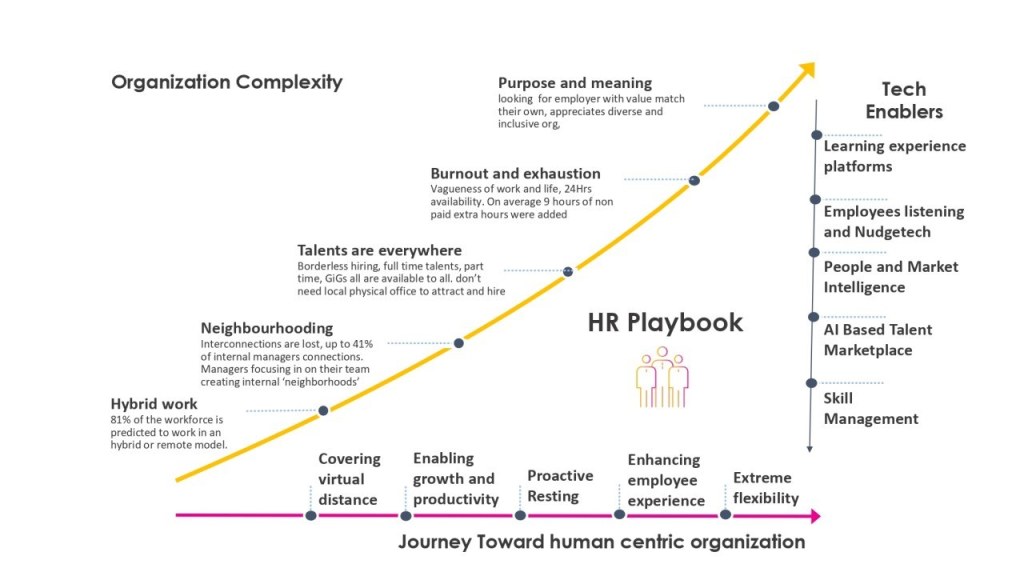
Created by Tengis Amartuvshin
1. Efficiency within the recruitment process (Vrontis et al., 2020)
2. Efficiency increased through an automated scheduling system.
3. Productivity levels can increase as repetitive and time consuming tasks can be handled through an automated system (Vrontis et al., 2020).
4. Analysis of foot traffic can be streamlined. Managers whose performance is usually tracked with foot traffic and results can hold bias in analysing this data, the implementation of AI during this analysis process can help to remove this bias.
5. Learning Management Systems can be tailored to individual employees learning styles, job titles and career goals.
1. Decisions are made through data analysis and an algorithm (Tambe et al., 2019).
2. Reduction in human presence in stores.
3. Requires policy development within most organisations as the existing policies are designed with human presence in mind rather than an automated data-analytical tool (Mukhopadhyay et al., 2026).
Created by Kristin Ford
The implementation of AI within the supermarket industry needs to take into account several ethical considerations and initial challenges. The creation of a fair system needs to be considered firstly as an AI system built on an unfair or biased system will continue to foster discrimination and biases (Mukhopadhyay et al., 2026). Decisions within an AI based system are produced through a data-based algorithm, which can be viewed as removing the ‘human’ aspect of human resource management systems , and may raise issues with employees (Tambe et al., 2019).
The complexity of the HRM system can be a challenge for the implementation of an AI system within an organisation as HRM consists of many aspects which are continually evolving (Tambe et al., 2019). The implementation of an AI system within the supermarket industry and within HRM processes will require a review of policy and the re-development of some key policy ( Mukhopadhyay et al., 2026). Challenges can also occur if the initial data set provided is too small as this will limit the ability for the system to be applied across the business as the supermarket industry and HRM are complex in themselves (Tambe et al., 2019).
Human Resource (HR) has a vital importance for improving artificial intelligence (AI) service in retail supermarkets. This is because AI has impact on staff as well as customers, and HR is involved in improving AI from that angle.
1.HR Supports in AI for Retail Supermarkets:
Outcome- Well equipped and adequately trained staff offer high quality customer service
2. Workforce Management & Employee Assistance:
Outcome- Fast paced and efficient service delivery, shortened queue times, and increased employee satisfaction
3. Utilizing AI to Boost Customer Satisfaction:
Outcome- Streamlined, tailored, and secure shopping experience.
4. The Strategic Significance of HR in AI Implementation:
Conclusion: AI proves efficient when staff members are adequately trained.
Created by Riddhi Dholariya
In retail supermarkets, HR supported AI enhances customer experience by improving human capital helping recruit, train, and support employees so they can deliver faster, more personalized, and efficient customer service.
Outcomes: Talented, competent, and happy employees
2. Enhanced Customer Service via Employees
Outcome: Increased efficiency in customer services
3. Personalized Customer Services
Outcome: More content customers.
4. Fast and Secure Transactions
Outcome: Easy and safe transactions
Created by Dilpreet Kaur
Bullhorn (2018), “2018 UK recruitment trends report: the industry’s outlook for 2018”, available at: http://pages.bullhorn.com/rs/131-YQK-568/images/2018%20Trends%20Report_UK.pdf
Chung, T. S., Wedel, M., & Rust, R. T. (2020). Adaptive personalisation using social networks. Journal of the Academy of Marketing Science, 44(1), 66–87. https://doi.org/10.1007/s11747-015-0441-x
Dastin, J. (2018, October 10). Amazon scraps secret AI recruiting tool that showed bias against women. Reuters. https://www.reuters.com/article/us-amazon-com-jobs-automation-insight-idUSKCN1MK08G
Gartner. (2022). HR technology benchmarking survey: Employee experience and digital HR adoption. Gartner Research.
Manyika, J., Lund, S., Chui, M., Bughin, J., Woetzel, J., Batra, P., Ko, R., & Sanghvi, S. (2017). Jobs lost, jobs gained: Workforce transitions in a time of automation. McKinsey Global Institute. https://www.mckinsey.com/featured-insights/future-of-work/jobs-lost-jobs-gained-what-the-future-of-work-will-mean-for-jobs-skills-and-wages
Mukhopadhyay, S., Senanayake, S., & Prasad, P. (2026). Innovative Technologies in Intelligent Systems and Industrial Applications.
https://doi.org/10.1007/978-3-032-10898-2
Tambe, P., Cappelli, P., & Yakubovich, V. (2019). Artificial intelligence in human resources management: Challenges and a path forward. California Management Review, 61(4), 15–42. https://doi.org/10.1177/0008125619867910
Vrontis, D., Christofi, M., Pereira, V., Tarba, S., Makrides, A., & Trichina, E. (2022). Artificial intelligence, robotics, advanced technologies and human resource management: A systematic review. The International Journal of Human Resource Management, 33(6), 1237–1266. https://doi.org/10.1080/09585192.2020.1871398
Designed with WordPress
 The Purpose and Future of Work